

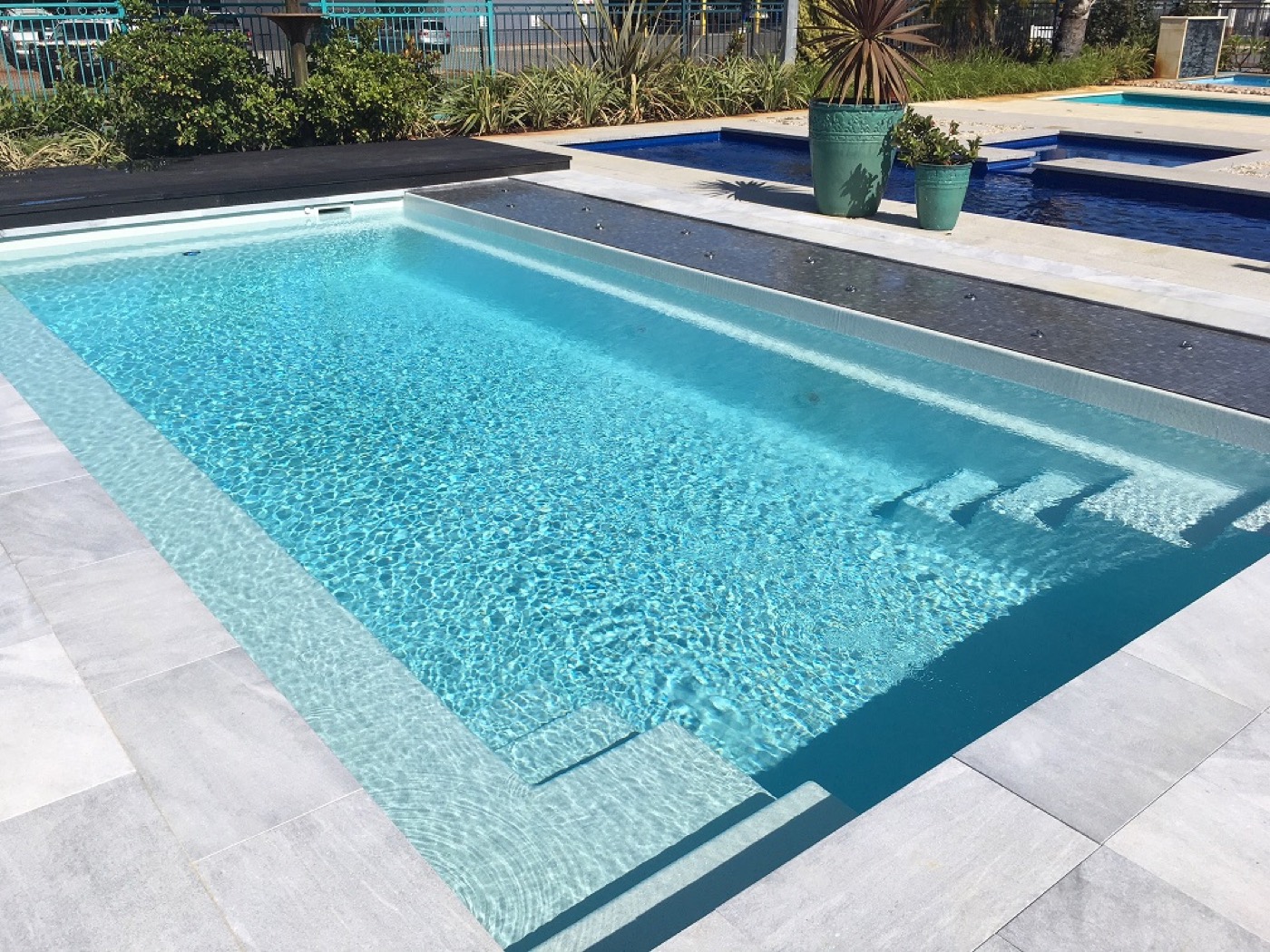
Hot days, heavy use and summer storms can turn a sparkling pool green surprisingly quickly. Here is why it happens, how to fix it safely and a simple routine to keep your water clear through a Canberra summer.
Why Pools Turn Green
A green pool is almost always algae. In pools disinfected with chlorine, algae is a sign that free chlorine is not being properly maintained. The usual causes in summer are:
- Hot weather and strong sun, which use up chlorine faster.
- Heavy use over the holidays.
- Rain and storms washing debris and nutrients into the water.
- pH drifting out of range, which makes chlorine less effective.
- A filter that needs backwashing or cleaning, or a pump not running long enough.
The Levels to Aim For
According to SA Health’s guidance for home pools, free chlorine should be kept at 1.0 to 3.0 mg/L, with 2 mg/L ideal, and pH between 7.2 and 7.6. At this pH, chlorine works efficiently and the water is most comfortable for swimmers. You can read the full SA Health home pool guidance.
Read Saltwater vs Chlorine Pools: Which is Right for Your Family?
How To Fix a Green Pool, Step By Step
- Test the water. Check free chlorine and pH with a test kit or test strips, or take a sample to your local pool shop.
- Balance the pH first. Bring pH back into the 7.2 to 7.6 range so the chlorine can do its job.
- Shock the pool. Add a high dose of chlorine following the product label for your pool’s volume.
- Brush the walls, floor and steps to loosen algae.
- Run the filter continuously until the water clears.
- Backwash or clean the filter as it fills with dead algae and debris.
- Retest and repeat until the water is clear and levels are back in range.
Do not swim until chlorine and pH are back within the normal range.
How to Lower pH
If your pH is above 7.6, chlorine becomes less effective and algae can grow more easily. Use a pH reducer from your pool shop, adding it as the label directs, then let the water circulate and retest. Make small adjustments rather than one big dose.
How to Raise pH
If your pH is below 7.2, the water can irritate eyes and skin. Use a pH increaser following the label directions, then circulate and retest.
Chemical Safety
- Always follow the product label.
- Never mix chemicals together. Pool chlorine and pool acid, if mixed, produce chlorine gas.
- Add chemicals to water, never water to chemicals.
- Store chemicals in a cool, dry place out of reach of children.
How to Backwash a Sand Filter
Backwashing reverses the water flow through a sand filter to flush trapped debris out to waste. A sand filter is generally backwashed every few weeks, or whenever the pressure gauge reads noticeably higher than normal. Follow the steps in your filter’s manual, and always turn the pump off before changing the valve position.
Cartridge filters are not backwashed. Instead, the cartridge is removed and hosed clean on a similar schedule and fully cleaned a few times a season. Learn more on our pool filtration page.
A Simple Summer Routine
- Test chlorine and pH regularly, more often during hot weather and heavy use.
- Skim leaves and empty the skimmer basket.
- Run the pump long enough each day for your pool’s turnover.
- Brush the pool weekly.
- Check your filter pressure and backwash or clean when needed.
- Keep the water level high enough for the skimmer to work.
- Test again after storms or a pool party.
A Smooth Surface Helps
Fibreglass pools have a smooth, non-porous surface, so algae has less to cling to and the pool is generally easier to clean. Technologies such as Pool ColourGuard on Aqua Technics shells add a high-gloss surface that resists algae and staining.
Read How Long Does a Fibreglass Pool Last? Durability, Resurfacing and Warranty Explained
Frequently Asked Questions
How long does it take to clear a green pool?
It depends on how green the pool is, your filter and how quickly levels are brought back into range. A lightly green pool can clear within a day or two, while a heavily green pool may take longer and need repeated treatment.
Is it safe to swim when the pH is off?
It is best to wait. When pH is outside 7.2 to 7.6, chlorine works less effectively and the water can irritate eyes and skin.
How often should I test my water in summer?
Test more often in summer than in winter, especially during heatwaves, after storms and after heavy use. Many owners test a few times a week in peak season.
Why does my pool keep turning green?
Repeated algae usually points to chlorine levels dropping too low, pH drifting high, or the filter and pump not keeping up. Check your levels, run times and filter condition.
Planning a new pool?
Ask us about filtration and surfaces designed to make ownership easier. Get a quote or call 0428 901 094.

Follow the builds.
Fresh installs, drone shots and handover days as they happen!